Selling & Money · 9 min read
How to Start a Small Business in Nigeria With Little Capital
A practical guide to starting a small business in Nigeria with little money: choosing an idea, testing it, budgeting, first customers and records.
By Noah Precious · Published 28 October 2026
Key takeaways
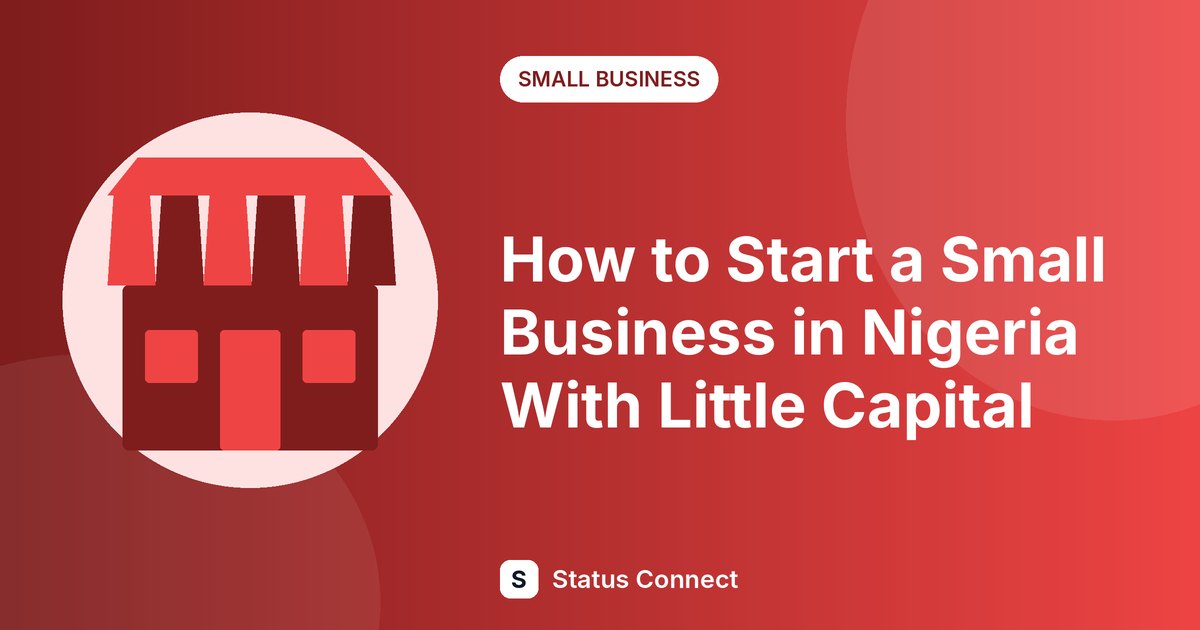
- Start with a problem people already pay to solve and a skill you have
- Test demand with a few real customers before buying stock in bulk
- Budget by category and keep business money separate from personal money
- Use WhatsApp, Status and referrals to find your first customers
- Write down every sale and expense from day one
Many Nigerians have a business idea but no big savings, no loan and no shop. The good news is that a lot of useful businesses can begin small, from a bedroom, a market stall or a phone. The hard part is not usually the idea. It is choosing something realistic, testing it cheaply and not losing your little money to avoidable mistakes.
This guide walks through the practical steps of starting a small business in Nigeria with limited capital. It does not promise quick riches, because nobody can honestly do that. It shows a sensible path that many small traders, tailors, caterers and freelancers already follow.
Step 1: Choose an idea you can actually run
The best low-capital businesses usually match three things: something people already buy, something you know or can learn quickly, and something you can start with the resources you have.
Ask yourself these questions:
- What do people around me complain about or keep asking for? Examples are reliable delivery, neat laundry, home-cooked meals, phone repairs or help with typing and design.
- What skills do I already have? Cooking, braiding, sewing, tutoring, graphic design, baking and driving all count.
- Can I start without renting a shop? If yes, your running costs stay low.
- Would I still do this on a slow day? Every business has slow days.
Avoid copying something only because it looks profitable on social media. If ten people on your street already sell the same thing, you need a clear reason why customers would choose you, such as better quality, better delivery or better service.
Step 2: Check demand before you spend
Validation means finding proof that people will pay before you invest heavily. It costs very little and can save you from a bad decision.
- Talk to ten possible customers. Ask what they currently buy, where they buy it and what annoys them.
- Look at competitors. Visit their shops or pages. Note what they charge, how they present products and what customers complain about in the comments.
- Run a small test. Make a few items, take a few orders or offer a trial service. For example, a baker can prepare a small batch for pre-orders, and a freelancer can offer one discounted project in return for feedback.
- Ask for payment or a firm commitment. Compliments are nice, but orders are better proof.
If nobody is interested after a fair test, change the offer, the price or the idea. That is a cheap lesson.
Step 3: Work out your costs by category
You do not need a complicated spreadsheet. You need a clear list, written on paper or in a notes app. Costs usually fall under these categories:
- Stock or raw materials: what you buy to resell or make products.
- Equipment and tools: a sewing machine, oven, blender, laptop, ring light or phone stand.
- Packaging and branding: boxes, nylon, labels, a simple logo.
- Transport and delivery: moving goods, meeting customers or paying riders.
- Data and airtime: you need these to chat with customers and post updates.
- Power and fuel: electricity, generator fuel or a power bank.
- Rent or space: if you use a shop, stall or workshop.
- Registration and permits: if your trade needs them. See the section below.
- Emergency cushion: a small reserve for the unexpected.
Check real current prices at the market, from suppliers or online, because prices change. Then build a minimum start list: what you must have on day one, and what can wait until money starts coming in.
Price so you can survive
A common error is pricing by guesswork or by matching the cheapest seller. Add up what each item costs you, including your transport, packaging and a share of data and power, and make sure your price leaves a profit. Our guide on how to price products on WhatsApp in Nigeria explains this in more detail.
Step 4: Source your goods or build your service
How you get what you sell will shape your margins.
- Buy small first. Start with a small quantity of stock so a mistake does not wipe out your capital.
- Compare suppliers. Visit more than one market or wholesaler, and ask about prices for different quantities.
- Build relationships. A supplier who knows you may give better advice, keep goods for you or allow you to restock quickly.
- Check quality yourself. Inspect goods before paying, and do not rely only on pictures.
- Avoid advance payment to strangers. Be careful with online sellers who ask for full payment before you have seen anything. Our article on spotting WhatsApp scams in Nigeria covers common tricks.
For services, such as tailoring, tutoring or design, your main stock is your time and skill. Set clear delivery times and do not promise more than you can handle alone.
Step 5: Get your first customers on WhatsApp
You may already have the best starting audience: the people saved on your phone. Many Nigerian small businesses win early customers through WhatsApp.
- Set up properly. Use the Business app, add a clear profile, and list your products. See WhatsApp Business app setup in Nigeria.
- Post on Status. Share clear photos, prices and how to order. For ideas, read WhatsApp Status content ideas for vendors.
- Tell people directly. Send a short, polite message to friends and family explaining what you sell, and ask them to share it. Do not spam strangers or add people to groups without asking.
- Ask for referrals. After a happy sale, ask the customer to recommend you to a friend.
- Respond quickly. Fast, friendly replies often decide who gets the sale.
For more methods that cost little or nothing, read how to get customers without ads in Nigeria.
Step 6: Keep simple records from day one
Many small businesses fail because the owner cannot tell whether they are making a profit. You do not need accounting software. You need a notebook or a basic phone spreadsheet.
Record the following every day:
- Each sale: date, item, amount and who paid.
- Each expense: what you spent and why.
- Money owed to you, and money you owe suppliers.
- Stock you have left.
Every week, add it up and see what is left after costs. This shows you which products really make money. Also keep business money separate from personal money. If you can, open a separate account for the business and pay yourself a modest, fixed amount rather than dipping into your capital whenever you like.
Step 7: Build trust so customers return
For a new business, trust is capital. Customers who have never heard of you need a reason to believe you will deliver.
- Be honest about prices, delivery times and what the product is.
- Show real photos of real products. Our guide on product photos with your phone for WhatsApp Status can help.
- Keep your promises, and apologise quickly when something goes wrong.
- Share feedback from satisfied customers, with their permission.
More ideas are in how to build customer trust online in Nigeria.
Low-capital business ideas, with realistic notes
These are examples, not guarantees. Results depend on your location, your effort and the market.
- Food and snacks: puff-puff, chin chin, meat pies, small chops or meal prep. Demand is steady, but you must follow hygiene rules and manage perishable stock.
- Reselling household or fashion items: buy from a wholesale market and resell by WhatsApp. Margins depend on your buying price, and you need to avoid stock that does not move.
- Phone accessories: low cost per item, but there is a lot of competition and fake products to watch out for.
- Laundry and ironing: needs patience, a reliable water supply and good time management.
- Freelance services: writing, design, social media management, virtual assistance or tutoring. Startup costs are mostly your device and data. Read how freelancers can find clients on WhatsApp in Nigeria.
- Errands and delivery: works well in busy cities if you are reliable, but fuel, safety and transport costs must be counted.
- Beauty and grooming at home: braiding, makeup or barbing can start with personal tools, though you need to build a reputation first.
- Event help: decoration, ushering or photography, which often depends on referrals and seasonal demand.
For more income ideas that use the platform, see how to make money on WhatsApp in Nigeria.
Mistakes that drain small businesses
- Spending all your capital on stock. Keep some cash for restocking, data and emergencies.
- Selling on credit too easily. Unpaid debts can stop your business quickly. Be careful and write down who owes what.
- Not separating money. Mixing personal and business cash hides losses.
- Ignoring rules. Some trades need licences or health checks, so ask the relevant local authority.
- Waiting for perfection. Start small, learn and improve.
- Taking loans you cannot repay. Be careful with quick loan apps and offers that sound too good to be true.
When to think about registration
You can often begin informally while you test your idea, but a registered business can open a bank account, look more credible and may be required for certain contracts. When you are ready, read our guide to registering a business name with the CAC and confirm the details on the official Corporate Affairs Commission website. Tax rules and requirements can change, so check with the relevant government bodies.
Frequently asked questions
How much money do I need to start?
There is no single figure, because it depends on the business. A service you can offer with your phone needs far less than one that requires equipment or a shop. List your costs by category, check current prices and start with the smallest version that can earn money.
Should I start with a shop or online?
Many beginners start online or from home to keep costs low, then move to a shop when sales are steady. If your business needs walk-in customers, such as a food stall, a location may matter more from the start.
Do I need to register before I begin selling?
Not always at the very beginning, but requirements vary by activity. Registering can help you build credibility and open a business account. Check the official CAC site and ask about any permits your trade needs.
How do I get my first ten customers?
Start with people who already know you, show clear photos and prices on Status, ask for referrals and respond fast. Give excellent service to the first few buyers, because their recommendations are your best marketing.
Final thoughts
A small business grows from a clear idea, careful spending, honest service and steady records. Start with what you can manage, learn from real customers and improve week by week. If you want to meet other business owners and swap contacts, you can join the Status Connect community.