Selling & Money · 9 min read
How to Register a Business in Nigeria With the CAC: A Beginner's Guide
A plain guide to CAC registration in Nigeria: business name vs limited company, why register, general steps, tax, bank account and scams to avoid.
By Noah Precious · Published 28 October 2026
Key takeaways
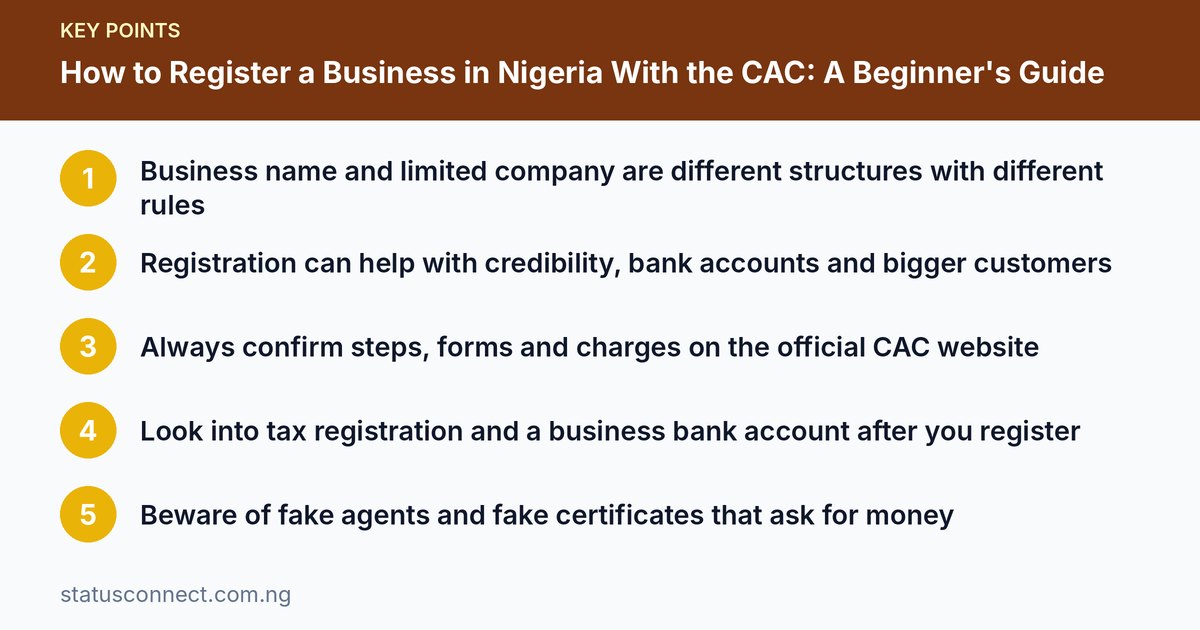
- Business name and limited company are different structures with different rules
- Registration can help with credibility, bank accounts and bigger customers
- Always confirm steps, forms and charges on the official CAC website
- Look into tax registration and a business bank account after you register
- Beware of fake agents and fake certificates that ask for money
Sooner or later, many small business owners in Nigeria ask the same question: should I register my business? You may have started on WhatsApp, selling to friends and neighbours. Then a bigger customer asks for a registered name, a bank asks for documents, or you simply want to look more credible. That is usually when the Corporate Affairs Commission, better known as the CAC, enters the conversation.
This guide explains the basics in plain English: the difference between a business name and a limited company, why people register, what the process generally looks like, what to do afterwards and how to avoid scams. It is general information, not legal advice.
What the CAC does
The CAC is the Nigerian government body that registers companies, business names and certain other organisations. When you register, your business gets an official record, and you receive documents that show it exists legally. Registration is separate from other obligations, such as tax and any sector licences your trade may need.

Business name vs limited company
For most small businesses, the choice comes down to two common structures. They are different in important ways, so it helps to understand them before you start.
Business name
A registered business name is a simpler option commonly used by sole traders and small partnerships. The business is usually closely tied to the owner or owners. In general terms:
- It is often simpler and cheaper to set up and manage than a company.
- The owner is usually personally responsible for the business's debts and obligations.
- It suits small shops, freelancers, caterers, tailors and small trading businesses.
Limited company
A limited company is a separate legal entity from the people who own it. In general terms:
- It involves more formal requirements, such as directors, shareholders and ongoing filings.
- Liability for owners is typically limited, though there are exceptions the law may impose.
- It can suit businesses that plan to grow, take on investors, bid for larger contracts or separate the owners from the business.
The right choice depends on your plans, the size of your business and the risks involved. If you are unsure, speak to an accredited agent, a lawyer or an accountant, and check the CAC's current guidance.
Why register your business
Not every tiny business needs registration on day one, but there are real benefits to doing it when you are ready:
- Credibility. Customers, suppliers and partners often trust registered businesses more.
- Bank account. Banks commonly ask for registration documents to open a business account.
- Bigger opportunities. Some companies, schools, offices and organisations will only buy from registered vendors.
- Brand protection. Registering your name can help stop someone else from registering the same name as a business.
- Cleaner finances. A business account separates your personal and business money.
On the other hand, registration comes with responsibilities, such as proper records and ongoing compliance. Consider whether your business is ready. If you are still testing an idea, our guide to starting a small business in Nigeria with low capital may help you decide what to do first.
The general steps to register
The exact steps and screens change, so treat this as a map and not a manual. Follow the official CAC instructions for the details.
- Decide the structure. Choose between a business name and a limited company, using the points above.
- Choose a name and check availability. Pick a name that is clear and easy to spell. The CAC will not approve a name that is too similar to an existing one or that breaks naming rules. Prepare a few alternatives in case your first choice is rejected.
- Gather your information and documents. See the list below.
- Apply through the official channel. The CAC has an online registration system. Go to the official website and follow the links from there instead of using links sent to you by strangers.
- Pay only through official, verifiable payment routes. Confirm the charges on the CAC website. Do not trust a quoted amount that you cannot verify.
- Wait for review and respond to queries. The CAC may ask for corrections, such as a clearer ID image or a different name.
- Receive your registration documents. Keep both digital and printed copies somewhere safe, and check every detail for spelling mistakes.
Timelines vary, so avoid agents who promise something unrealistic and check the CAC site for guidance.
Documents and details you will typically need
Requirements depend on the structure you choose, so confirm what applies to you. Commonly, applicants are asked for items like these:
- The proposed business name, and sometimes alternatives.
- The nature of the business, meaning what you do.
- Your full name, address and contact details.
- A valid means of identification, such as one that the CAC currently accepts.
- A passport photograph or similar, if required.
- Your signature, and sometimes proof of address.
- For a limited company, details of directors, shareholders and the company's registered address.
Use the exact names shown on your ID. A small mismatch can cause delays. Make sure your phone number and email address are active because notices may be sent there.
Using an agent: be careful
Many people prefer to use an accredited agent, a lawyer or a professional service rather than doing it alone. That can be a sensible choice, especially for a limited company, but choose carefully.
- Ask for the agent's credentials and check them with the relevant body or the CAC.
- Get the agreed price and service in writing before you pay.
- Never hand over your ID and passwords to someone you do not know.
- Make sure the registration is made in your name or your company's name, and that you receive the documents.
After registration: your next steps
Registration is not the end of the journey. Once your documents are ready, consider these steps:
Tax registration
Businesses generally have tax responsibilities. Find out what applies to your business and how to get a Tax Identification Number if you need one. The Federal Inland Revenue Service website is a place to start, though tax rules and institutions can change, so confirm the current arrangements. An accountant can also guide you.
Open a business bank account
Ask a bank what documents it needs for a business account. This keeps business funds separate from personal money and makes records easier. For general information on banking and payments in Nigeria, you can visit the Central Bank of Nigeria website.
Keep records and meet filing duties
Keep receipts, invoices and a simple sales and expense record. Registered companies may also have to file returns or other documents regularly, so ask what applies to your structure and keep to deadlines.
Check for other licences
Some trades need extra permits, such as food, health, transport or financial services. Ask the relevant authority, which may be at federal, state or local government level.
Show your registered status properly
Once you are registered, update your WhatsApp business profile and other pages with your correct business name. Customers like clear information, as covered in WhatsApp Business app setup in Nigeria. Use your registered name consistently, and read our advice on building customer trust online in Nigeria.
Scams around business registration
Because many people are in a hurry to register, fraudsters target them. Watch for these signs:
- Someone sends a "CAC link" through WhatsApp or SMS and asks for payment. Go to the official website yourself.
- An agent asks for a payment into a personal account with no receipt or written agreement.
- A seller offers a "ready-made" certificate or says registration can be done in an impossibly short time without any checks.
- You receive a certificate that looks edited, has misspelt details or cannot be verified.
- Someone claims to be from the CAC and demands a fee to avoid a penalty.
If something feels off, stop and verify through the official channels. For wider guidance, read how to spot WhatsApp scams in Nigeria. If you believe you have been defrauded, you can report it to the police or to an agency such as the EFCC.
Mistakes to avoid
- Choosing a name that is too general or too close to a known brand.
- Registering without understanding the difference between a business name and a company.
- Giving someone else control over your registration account.
- Ignoring tax and filing duties after registration.
- Assuming registration alone grants you permission to operate in a regulated trade.
- Not keeping copies of your documents.
Frequently asked questions
Do I have to register my business before I start?
Requirements depend on what you do and how you operate, so there is no single answer. Many small traders begin informally, but registration is often needed for banking, certain contracts and credibility. Check the CAC site and any trade-specific rules.
What is the main difference between a business name and a limited company?
A business name is usually simpler and more closely tied to its owner. A limited company is a separate legal entity with more formal rules. Think about your growth plans and the level of risk before you choose.
Can I register on my phone?
Many people complete parts of the process using a phone, but the official process and tools can change. Start from the CAC website and make sure you have clear scans or photos of your documents and a steady internet connection.
How do I know a CAC certificate is genuine?
Do not rely on appearance alone. Use the verification options that the CAC provides on its official website, and be wary of any document you cannot confirm. If you buy from or deal with a registered business, you can ask for details and check them.
Final thoughts
Registering a business is a practical step that can make your business more credible and open new doors, but it should be done carefully and through official routes. Decide on the right structure, prepare your documents, confirm every requirement with the CAC and handle tax and banking afterwards. If you are building your network along the way, you can join the Status Connect community and learn how to grow your business network on WhatsApp.